What is Hernia Surgery?
Dr. Prerak Patel specializes in advanced hernia surgery using both laparoscopic (minimally invasive) and open surgical techniques, depending on the patient's condition and the type of hernia. Every patient undergoes a thorough clinical evaluation and personalized treatment planning to ensure safe, effective repair and long-term relief while promoting faster recovery and reducing the risk of recurrence.
Expert Care You Can Trust
Advanced Expertise
Personalized Care
Minimally Invasive
Trusted Excellence
- Conditions We Treat
- Advanced Surgical Treatment
- Recovery & Follow-up Care
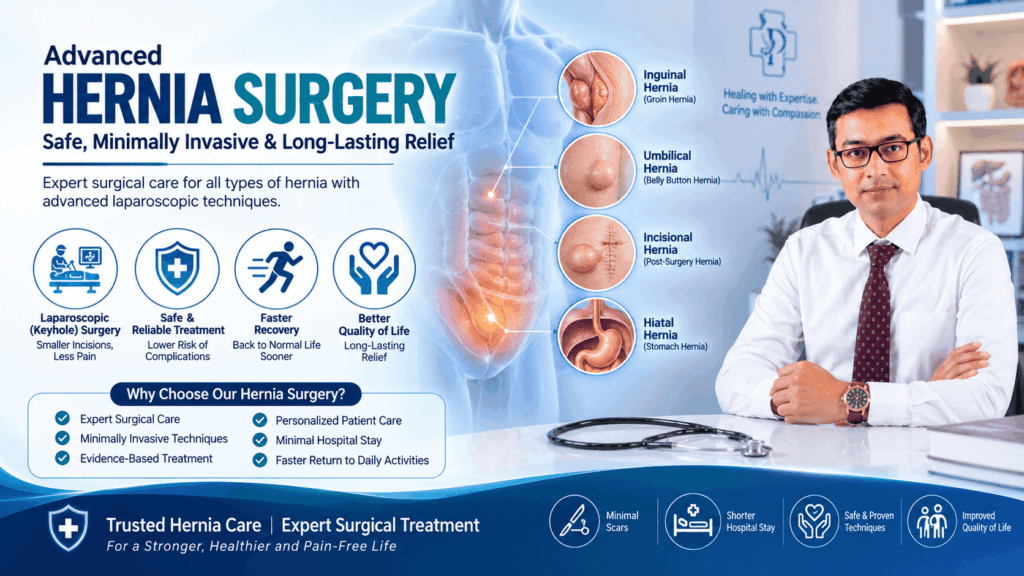
Dr. Prerak Patel provides comprehensive treatment for various types of hernias affecting adults. These include inguinal hernia, femoral hernia, umbilical hernia, epigastric hernia, incisional hernia, ventral hernia, recurrent hernia, and complex abdominal wall hernias. Every patient is carefully evaluated to determine the most appropriate surgical technique based on the size, location, and severity of the hernia, as well as the patient's overall health and lifestyle.
Modern hernia surgery focuses on providing durable repair with minimal discomfort and faster recovery. Dr. Prerak Patel performs both laparoscopic and open hernia repair using advanced surgical techniques and high-quality mesh when clinically appropriate. Minimally invasive surgery offers several advantages, including smaller incisions, reduced postoperative pain, minimal scarring, lower risk of infection, shorter hospital stays, and a quicker return to everyday activities. The surgical approach is always selected based on the patient's individual condition and medical requirements.
Recovery after hernia surgery is usually smooth when supported by proper postoperative care. Dr. Prerak Patel provides comprehensive follow-up that includes wound care, pain management, activity guidance, dietary advice, and regular postoperative evaluations. Most patients can gradually resume normal activities within a few weeks, depending on the type of surgery performed. Continuous follow-up helps ensure proper healing, minimizes the risk of recurrence, and supports a safe return to an active lifestyle.
Frequently Asked Questions
Common symptoms include a visible lump or swelling, pain or discomfort while lifting heavy objects, coughing, bending, prolonged standing, or during physical activity. Some patients may also experience a feeling of heaviness or pressure in the affected area.
Laparoscopic hernia surgery offers benefits such as smaller incisions, less pain, faster recovery, and minimal scarring for many patients. However, the most suitable approach depends on the type, size, and complexity of the hernia. Dr. Prerak Patel recommends the best option after a detailed evaluation.
Recovery time varies depending on the type of hernia and the surgical technique used. Most patients can return to light daily activities within a few days and resume normal routines over the following weeks, following their surgeon's advice and postoperative care plan.
Other Treatments
- GI Cancer Surgery
- Minimally Invasive & Laparoscopic GI Surgery
- Stomach Disorders
- Esophagus Disorders
- Gallbladder Disorders
- Hernia Surgery
- Liver Disorders
- Bile Duct Disorders
- Pancreatic Disorders
- Colon & Rectal Disorders
- Small Intestine Disorders
- Cytoreductive Surgery & HIPEC
- Proctology
- Inflammatory Bowel Disease (IBD)
