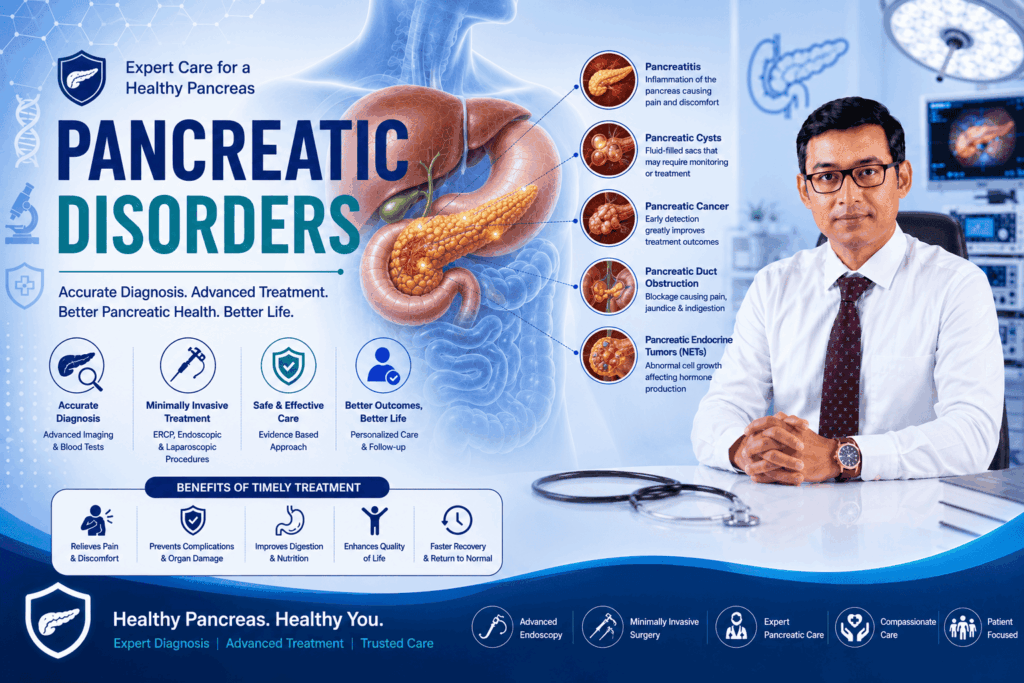
What are Disorders of the Pancreatic?
Dr. Prerak Patel specializes in the diagnosis and surgical management of pancreatic disorders using advanced hepatopancreatobiliary (HPB) and minimally invasive surgical techniques. Every patient undergoes a comprehensive clinical evaluation, laboratory investigations, advanced imaging, and personalized treatment planning to determine the safest and most effective treatment approach based on the type and severity of the pancreatic condition.
Expert Care You Can Trust
Advanced Expertise
Personalized Care
Minimally Invasive
Trusted Excellence
- Conditions We Treat
- Advanced Surgical Treatment
- Recovery & Follow-up Care
Dr. Prerak Patel provides specialized treatment for a wide range of pancreatic disorders, including acute pancreatitis, chronic pancreatitis, pancreatic cysts, pancreatic pseudocysts, benign pancreatic tumors, pancreatic neuroendocrine tumors, pancreatic cancer, intraductal papillary mucinous neoplasms (IPMN), mucinous cystic neoplasms (MCN), and other complex pancreatic diseases. Every patient receives a personalized treatment plan based on the diagnosis, stage of the disease, and overall health.
Modern pancreatic surgery requires meticulous planning and advanced surgical expertise. Dr. Prerak Patel performs specialized procedures such as pancreatic tumor removal, distal pancreatectomy, pancreaticoduodenectomy (Whipple procedure), cyst excision, drainage procedures for pancreatitis, and other HPB surgeries using both minimally invasive and conventional techniques, depending on the patient's condition. Every procedure is carefully planned using evidence-based protocols to maximize treatment success while preserving pancreatic function whenever possible.
Recovery after pancreatic surgery depends on the complexity of the procedure and the patient's overall health. Dr. Prerak Patel provides comprehensive postoperative care that includes pain management, nutritional counseling, pancreatic enzyme management when required, wound care, activity guidance, and regular follow-up evaluations. Every recovery plan is personalized to promote safe healing, monitor pancreatic function, identify any complications early, and support patients in returning to their normal daily activities with confidence.
Frequently Asked Questions
Common symptoms include persistent upper abdominal pain, back pain, nausea, vomiting, unexplained weight loss, jaundice, poor appetite, digestive problems, and recurrent episodes of pancreatitis. Any persistent or worsening symptoms should be evaluated by a specialist.
Surgery may be recommended for pancreatic tumors, pancreatic cancer, symptomatic cysts, chronic pancreatitis with persistent pain or complications, pancreatic pseudocysts, and other conditions that cannot be effectively managed with medication or endoscopic treatment. The treatment plan is based on detailed clinical evaluation and diagnostic findings.
Yes. Many pancreatic procedures can be performed using advanced laparoscopic or minimally invasive techniques, depending on the patient's condition and the complexity of the disease. These approaches may offer benefits such as smaller incisions, reduced pain, shorter hospital stays, faster recovery, and improved postoperative comfort while maintaining high standards of surgical care.
Other Treatments
- GI Cancer Surgery
- Minimally Invasive & Laparoscopic GI Surgery
- Stomach Disorders
- Esophagus Disorders
- Gallbladder Disorders
- Hernia Surgery
- Liver Disorders
- Bile Duct Disorders
- Pancreatic Disorders
- Colon & Rectal Disorders
- Small Intestine Disorders
- Cytoreductive Surgery & HIPEC
- Proctology
- Inflammatory Bowel Disease (IBD)
