What is Inflammatory Bowel Disease (IBD)?
Dr. Prerak Patel specializes in the diagnosis and surgical management of Inflammatory Bowel Disease, offering personalized treatment plans based on the severity of the disease, affected bowel segments, and the patient's overall health. Every patient undergoes a comprehensive clinical evaluation, endoscopic assessment, diagnostic imaging, and multidisciplinary consultation to ensure the safest and most effective treatment approach while improving long-term digestive health and quality of life.
Expert Care You Can Trust
Advanced Expertise
Personalized Care
Minimally Invasive
Trusted Excellence
- Conditions We Treat
- Advanced Surgical Treatment
- Recovery & Follow-up Care
Dr. Prerak Patel provides specialized treatment for a wide range of complications related to Inflammatory Bowel Disease, including Crohn's disease, Ulcerative Colitis, intestinal strictures, bowel obstruction, fistulas, abscesses, perforation, severe gastrointestinal bleeding, toxic megacolon, and colorectal complications associated with chronic IBD. Every patient receives a personalized treatment plan based on the type of disease, severity of inflammation, complications, and overall health.
When medical therapy alone is not sufficient, surgery may become an important part of IBD management. Dr. Prerak Patel performs advanced procedures such as bowel resection, strictureplasty, fistula surgery, abscess drainage, colectomy, ileostomy or colostomy creation when required, and restorative bowel surgery using minimally invasive laparoscopic and conventional techniques. Every surgical procedure is carefully planned with the goal of relieving symptoms, preserving as much healthy bowel as possible, reducing complications, and improving long-term quality of life.
Recovery after IBD surgery requires ongoing monitoring and personalized care. Dr. Prerak Patel provides comprehensive postoperative support that includes pain management, nutritional counseling, bowel function monitoring, medication guidance, wound care, lifestyle recommendations, and regular follow-up consultations. Every recovery plan is tailored to promote healing, prevent disease recurrence where possible, and help patients maintain long-term digestive health and an active lifestyle.
Frequently Asked Questions
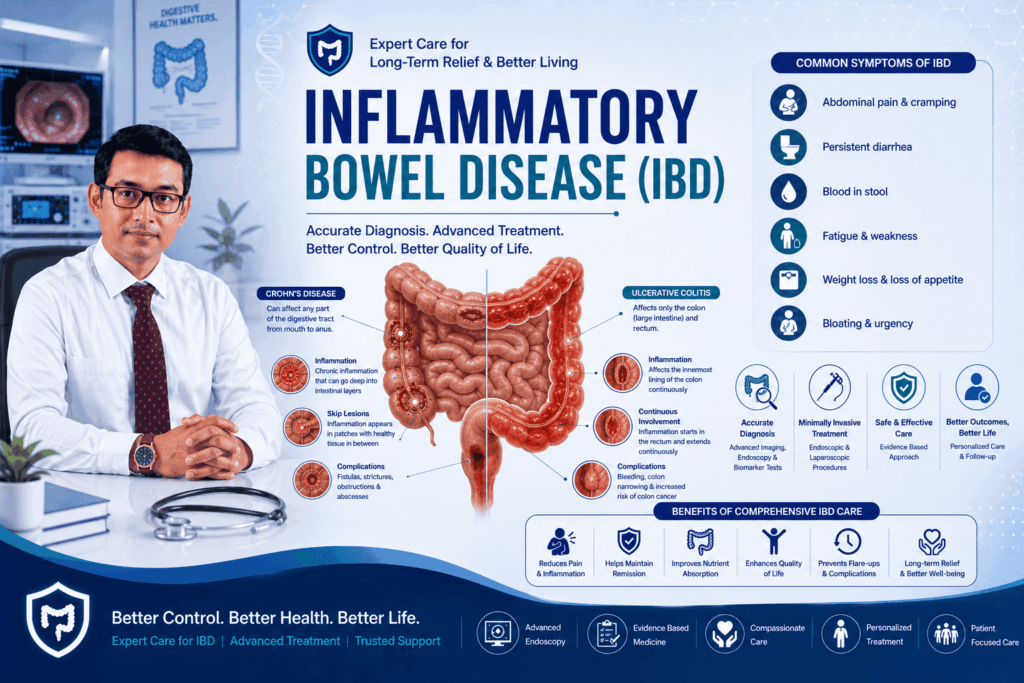
Crohn's disease can affect any part of the digestive tract and often involves all layers of the bowel wall, whereas Ulcerative Colitis primarily affects the colon and rectum, involving the inner lining of the intestine. Both are forms of Inflammatory Bowel Disease but differ in their location and pattern of inflammation.
Surgery may be recommended when medications fail to control symptoms or when complications such as bowel obstruction, fistulas, abscesses, severe bleeding, perforation, or colorectal cancer risk develop. The treatment approach is individualized after a thorough clinical evaluation.
Yes. Many patients experience significant improvement in symptoms and quality of life after appropriate surgical treatment. With regular follow-up, proper nutrition, medication when required, and ongoing medical care, most patients can return to their daily activities and lead active, healthy lives.
Other Treatments
- GI Cancer Surgery
- Minimally Invasive & Laparoscopic GI Surgery
- Stomach Disorders
- Esophagus Disorders
- Gallbladder Disorders
- Hernia Surgery
- Liver Disorders
- Bile Duct Disorders
- Pancreatic Disorders
- Colon & Rectal Disorders
- Small Intestine Disorders
- Cytoreductive Surgery & HIPEC
- Proctology
- Inflammatory Bowel Disease (IBD)
