
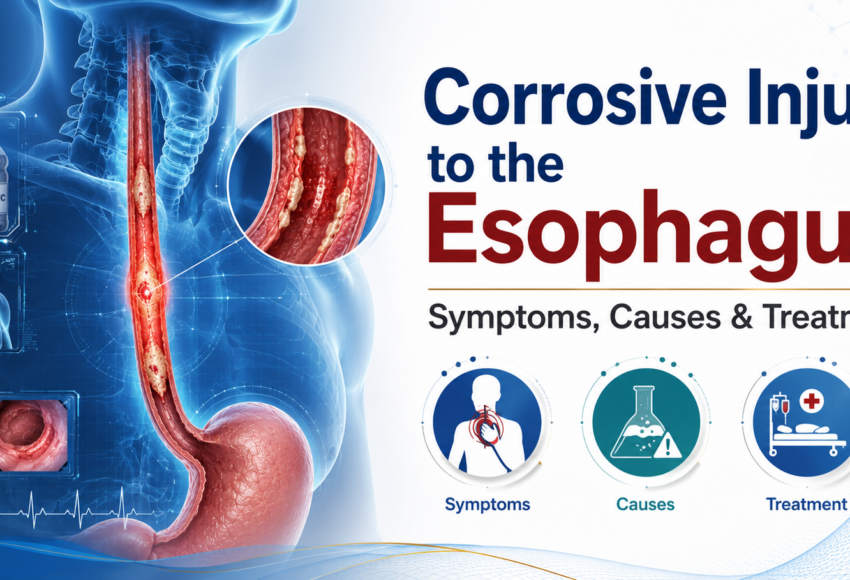
Corrosive Injury to the Esophagus: Symptoms, Causes & Treatment
Corrosive injury to the esophagus is a serious medical emergency that occurs when a person accidentally or intentionally swallows a corrosive substance such as a strong acid, alkali (base), industrial chemical, or household cleaning product. These substances can burn the lining of the esophagus, causing severe pain, difficulty swallowing, bleeding, and long-term complications such as esophageal strictures.
Prompt medical evaluation and early treatment are essential to reduce complications and improve recovery. In severe cases, corrosive injury may require endoscopic evaluation, hospitalization, nutritional support, repeated dilatation procedures, or reconstructive surgery.
This comprehensive guide explains the symptoms, causes, diagnosis, treatment options, complications, recovery, prevention strategies, and answers to the most frequently asked patient questions.
What Is a Corrosive Injury to the Esophagus?
A corrosive injury to the esophagus occurs when the inner lining of the food pipe (esophagus) is damaged by swallowing a corrosive chemical. The severity of injury depends on several factors, including:
- Type of chemical (acid or alkali)
- Concentration of the substance
- Quantity swallowed
- Duration of contact with the esophagus
- Time taken to receive medical treatment
The injury can range from mild irritation to deep tissue burns, perforation, and permanent narrowing of the esophagus.
What Is the Esophagus?
The esophagus is a muscular tube that carries food and liquids from the mouth to the stomach. Its lining is delicate and can be severely damaged by corrosive substances.
Severe burns may affect not only the esophagus but also the mouth, throat, stomach, and surrounding tissues.
Causes of Corrosive Esophageal Injury
Corrosive injuries most commonly occur due to accidental ingestion of household or industrial chemicals.
Common causes include:
- Toilet bowl cleaners
- Drain cleaners
- Bathroom cleaning acids
- Battery acid
- Industrial chemicals
- Bleaching agents
- Strong detergents
- Caustic soda (sodium hydroxide)
- Potassium hydroxide
- Hydrochloric acid
- Sulfuric acid
- Nitric acid
Children are at greater risk due to accidental ingestion, while adults may be affected through occupational exposure or intentional ingestion.
Acid vs. Alkali Injuries
Both acids and alkalis can damage the digestive tract, but they often affect tissues differently.
Acid Injury
Acids generally cause surface burns and may result in significant injury to the stomach in addition to the esophagus.
Alkali Injury
Alkalis penetrate deeper into tissues and often cause more severe injury to the esophagus, increasing the risk of long-term narrowing (stricture).
Both types require urgent medical assessment.
Symptoms of Corrosive Injury to the Esophagus
Symptoms vary according to the severity of the burn.
Common symptoms include:
- Severe pain while swallowing
- Difficulty swallowing (dysphagia)
- Pain in the mouth, throat, or chest
- Burning sensation in the throat
- Excessive drooling
- Vomiting
- Vomiting blood
- Hoarseness of voice
- Difficulty speaking
- Coughing
- Difficulty breathing
- Abdominal pain
- Fever
- Refusal to eat or drink (especially in children)
In severe cases, patients may develop shock or signs of perforation requiring immediate emergency care.
When Should You Seek Emergency Medical Attention?
Seek immediate medical care if someone has swallowed a corrosive substance and experiences:
- Severe throat or chest pain
- Difficulty swallowing saliva
- Vomiting blood
- Persistent vomiting
- Difficulty breathing
- Severe abdominal pain
- Loss of consciousness
- Signs of shock, such as cold skin, confusion, or low blood pressure
Early treatment can significantly reduce the risk of life-threatening complications.
What Should You Do Immediately After Ingestion?
If a corrosive substance has been swallowed:
- Go to the nearest emergency department immediately.
- Do not induce vomiting.
- Do not force the person to drink large amounts of water, milk, or neutralizing agents unless specifically instructed by a medical professional.
- Keep the chemical container, if available, to help identify the substance.
- Avoid giving food or medications until evaluated by a healthcare provider.
Prompt medical assessment is essential.
How Is Corrosive Esophageal Injury Diagnosed?
Diagnosis begins with a detailed history of the substance ingested, followed by a physical examination and appropriate investigations.
Clinical Evaluation
The doctor assesses:
- Type and quantity of chemical
- Time since ingestion
- Symptoms
- Airway stability
- Signs of perforation or shock
Blood Tests
Investigations may include:
- Complete Blood Count (CBC)
- Electrolytes
- Kidney Function Tests
- Liver Function Tests
- Arterial blood gas (if needed)
- Inflammatory markers
Upper GI Endoscopy
Upper gastrointestinal endoscopy is one of the most important diagnostic tools.
It is usually performed within the first 12–24 hours (when clinically appropriate) to assess:
- Extent of burns
- Depth of injury
- Risk of complications
- Treatment planning
CT Scan
A CT scan may be recommended if perforation or deep tissue injury is suspected.
Grading of Esophageal Injury
Doctors often classify corrosive injuries based on the depth and severity of tissue damage.
Grade I
Mild redness and swelling.
Grade II
Ulcers, blisters, and deeper burns.
Grade III
Extensive tissue death (necrosis) with a high risk of perforation and long-term complications.
The grade of injury guides treatment decisions.
Treatment of Corrosive Injury to the Esophagus
Treatment depends on the severity of injury.
Emergency Stabilization
Initial management may include:
- Airway protection
- Intravenous fluids
- Pain relief
- Nutritional support
- Monitoring in hospital
Medications
Doctors may prescribe:
- Pain medications
- Proton pump inhibitors (PPIs)
- Antibiotics (in selected patients)
- Other supportive medications as clinically indicated
Medication choices vary according to the severity of injury and associated complications.
Nutritional Support
Patients with severe injuries may require:
- Liquid diets
- Feeding tubes
- Intravenous nutrition in selected cases
Proper nutrition supports healing.
Endoscopic Dilatation
If scar tissue causes narrowing of the esophagus (stricture), repeated endoscopic dilatation procedures may be required to improve swallowing.
Surgery
Surgery may be necessary for:
- Esophageal perforation
- Severe strictures not responding to dilatation
- Tissue necrosis
- Reconstruction of the esophagus
Modern surgical techniques can significantly improve quality of life in selected patients.
Possible Complications
Complications depend on the severity of the injury and the speed of treatment.
Short-term complications include:
- Airway swelling
- Bleeding
- Infection
- Perforation
- Mediastinitis
- Sepsis
Long-term complications include:
- Esophageal strictures
- Chronic swallowing difficulty
- Malnutrition
- Recurrent aspiration
- Increased risk of esophageal cancer years after severe corrosive injury
Long-term follow-up is often recommended for patients with significant injuries.
Recovery After Treatment
Recovery varies widely depending on the extent of damage.
Patients are generally advised to:
- Follow prescribed medications
- Eat a doctor-recommended diet
- Stay well hydrated
- Avoid smoking and alcohol
- Attend scheduled follow-up appointments
- Report worsening swallowing difficulties promptly
Some patients may require repeated endoscopic treatments over several months.
Can Corrosive Injury Be Prevented?
Most accidental corrosive injuries are preventable.
Helpful prevention measures include:
- Store cleaning chemicals out of children’s reach.
- Keep chemicals in their original labeled containers.
- Never transfer corrosive liquids into beverage bottles.
- Use child-resistant packaging whenever possible.
- Wear appropriate protective equipment when handling industrial chemicals.
- Educate children about the dangers of household cleaners.
- Dispose of chemicals safely.
Simple precautions can prevent serious injuries.
Frequently Asked Questions (FAQs)
What is a corrosive injury to the esophagus?
A corrosive injury occurs when a strong acid, alkali, or other caustic chemical burns the lining of the esophagus after being swallowed.
What are the first symptoms of corrosive esophageal injury?
Common symptoms include severe pain while swallowing, chest or throat pain, excessive drooling, vomiting, difficulty swallowing, hoarseness, and abdominal pain.
Is corrosive injury a medical emergency?
Yes. Corrosive ingestion requires immediate medical evaluation because severe burns, airway swelling, perforation, and infection can develop rapidly.
Can the esophagus heal after corrosive injury?
Many mild injuries heal completely with appropriate treatment. Severe injuries may lead to scarring, strictures, or require repeated procedures or surgery.
Is endoscopy necessary after swallowing a corrosive substance?
In many cases, upper GI endoscopy is recommended to assess the severity of the injury and guide treatment. The decision depends on the patient’s symptoms, stability, and the type of substance ingested.
Can corrosive injury cause esophageal cancer?
Patients with severe corrosive injuries may have an increased long-term risk of developing esophageal cancer. Regular follow-up may be recommended in selected cases.
What foods should be eaten during recovery?
The treating doctor or dietitian may recommend liquids or soft foods initially, gradually advancing the diet as healing occurs. Nutritional advice should be individualized based on the severity of the injury.
Which specialist treats corrosive injury to the esophagus?
Corrosive injuries are typically managed by a multidisciplinary team that may include a gastroenterologist, gastrointestinal surgeon, emergency physician, intensivist, anesthesiologist, radiologist, nutrition specialist, and endoscopy team.
Conclusion
Corrosive injury to the esophagus is a potentially life-threatening condition that requires immediate medical attention. Prompt recognition, early endoscopic evaluation, appropriate supportive care, and timely intervention can significantly reduce complications and improve recovery.
Modern advances in emergency medicine, therapeutic endoscopy, nutritional care, and gastrointestinal surgery have greatly improved outcomes for many patients. If you or someone you know accidentally swallows a corrosive substance, seek emergency medical care immediately. Early treatment offers the best opportunity for healing, preservation of swallowing function, and prevention of long-term complications.
Disclaimer: This article is intended for educational purposes only and should not replace professional medical advice, diagnosis, or treatment. Corrosive ingestion is a medical emergency. If a corrosive substance has been swallowed, seek immediate medical care or visit the nearest emergency department without delay.
Leave a Comment