
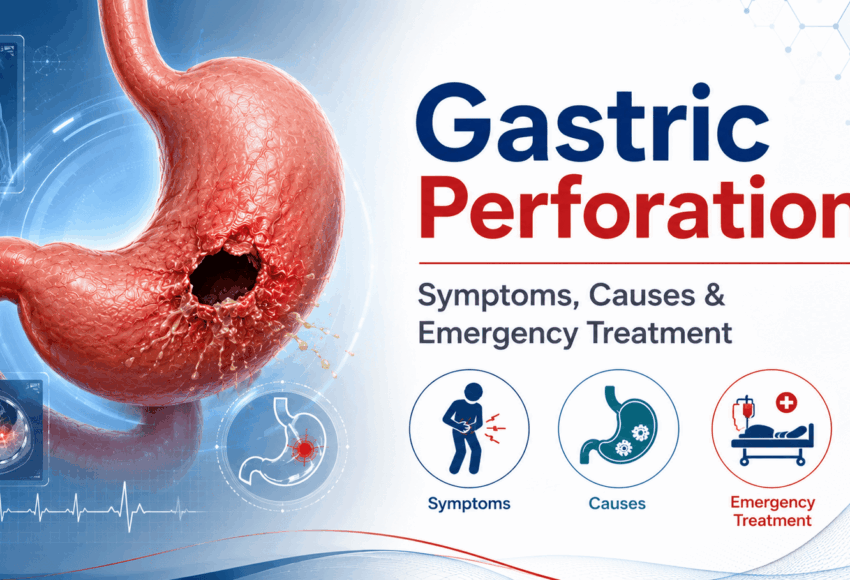
Gastric Perforation: Symptoms, Causes & Emergency Treatment
Gastric perforation is a serious medical emergency that occurs when a hole develops in the wall of the stomach, allowing stomach contents, digestive enzymes, bacteria, and acid to leak into the abdominal cavity. This can rapidly lead to severe infection (peritonitis), sepsis, and life-threatening complications if not treated immediately.
Prompt diagnosis and emergency surgery significantly improve survival and reduce complications. Understanding the warning signs and seeking urgent medical attention can save lives.
In this comprehensive guide, you’ll learn about gastric perforation, its symptoms, causes, risk factors, diagnosis, emergency treatment, recovery, prevention, and answers to frequently asked questions.
What Is Gastric Perforation?
A gastric perforation is a full-thickness tear or hole in the wall of the stomach. Once the stomach wall is breached, food particles, gastric acid, and bacteria spill into the abdominal cavity, causing severe inflammation and infection.
Unlike common stomach ulcers or gastritis, gastric perforation requires immediate medical intervention and is considered a surgical emergency.
Without timely treatment, complications can develop within hours.
Why Is Gastric Perforation Dangerous?
The stomach normally contains strong digestive acids and bacteria. When these substances leak into the abdomen, they can cause:
- Acute peritonitis (infection of the abdominal lining)
- Severe internal inflammation
- Sepsis (body-wide infection)
- Septic shock
- Multi-organ failure
- Death if treatment is delayed
Early diagnosis and emergency surgery are critical for survival.
Symptoms of Gastric Perforation
Symptoms usually appear suddenly and worsen rapidly.
Common signs and symptoms include:
- Sudden, severe upper abdominal pain
- Pain that spreads throughout the abdomen
- Rigid or hard abdomen
- Severe tenderness when touched
- Pain that worsens with movement
- Nausea and vomiting
- Fever and chills
- Rapid heartbeat
- Difficulty breathing due to abdominal pain
- Low blood pressure
- Weakness or dizziness
- Cold, clammy skin
- Confusion in advanced cases
These symptoms require immediate emergency medical evaluation.
Causes of Gastric Perforation
Several medical conditions can lead to perforation of the stomach wall.
The most common causes include:
Peptic Ulcer Disease
Untreated or severe stomach ulcers are the leading cause of gastric perforation.
Long-Term Use of Painkillers
Frequent use of NSAIDs such as ibuprofen, diclofenac, and naproxen can damage the stomach lining and increase the risk of ulcers and perforation.
Helicobacter pylori (H. pylori) Infection
Chronic H. pylori infection weakens the stomach lining and contributes to ulcer formation.
Stomach Cancer
Advanced gastric cancer may erode the stomach wall and result in perforation.
Traumatic Injury
Road accidents, falls, or penetrating abdominal injuries can rupture the stomach.
Corrosive Chemical Ingestion
Swallowing strong acids or alkalis can severely damage the stomach lining.
Medical Procedures
Rarely, endoscopy or other gastrointestinal procedures may cause accidental perforation.
Risk Factors
Certain factors increase the likelihood of gastric perforation, including:
- History of stomach ulcers
- Chronic H. pylori infection
- Long-term NSAID use
- Smoking
- Excessive alcohol consumption
- Advanced age
- Chronic steroid use
- Severe stress-related ulcers
- Previous gastric surgery
- Stomach cancer
Managing these risk factors can help reduce the likelihood of perforation.
When Should You Go to the Emergency Department?
Seek emergency medical care immediately if you experience:
- Sudden severe abdominal pain
- A hard or board-like abdomen
- Fever with intense abdominal pain
- Vomiting blood
- Black or tarry stools
- Fainting or dizziness
- Rapid heartbeat
- Difficulty breathing
- Signs of shock such as cold, clammy skin or confusion
Do not delay treatment or attempt self-medication. Gastric perforation is a medical emergency.
How Is Gastric Perforation Diagnosed?
Rapid diagnosis is essential to prevent complications.
Physical Examination
Doctors evaluate:
- Abdominal tenderness
- Guarding
- Rigidity
- Signs of shock
Blood Tests
Investigations may include:
- Complete Blood Count (CBC)
- Electrolytes
- Kidney Function Tests
- Liver Function Tests
- Blood cultures
- C-reactive protein (CRP)
- Lactate levels
Imaging Studies
X-ray
An upright chest or abdominal X-ray may reveal free air beneath the diaphragm, suggesting perforation.
CT Scan
Contrast-enhanced CT scanning is the most accurate imaging test for identifying the location and extent of the perforation.
Ultrasound
Ultrasound may detect free abdominal fluid but is generally less sensitive than CT for diagnosing gastric perforation.
Emergency Treatment for Gastric Perforation
Treatment begins immediately after diagnosis.
Initial Stabilization
Emergency care includes:
- Intravenous (IV) fluids
- Oxygen therapy
- Pain management
- Broad-spectrum intravenous antibiotics
- Nasogastric tube to decompress the stomach
- Close monitoring of blood pressure, heart rate, and oxygen levels
Emergency Surgery
Surgery is the standard treatment for most patients.
The procedure may include:
- Closing the perforation
- Repairing the stomach wall
- Removing severely damaged tissue if necessary
- Washing the abdominal cavity to remove contamination
- Treating the underlying cause, such as an ulcer or tumor
Depending on the patient’s condition, surgery may be performed using:
- Laparoscopic (minimally invasive) techniques
- Open surgery (laparotomy)
The surgical approach depends on the size of the perforation, the patient’s stability, and the degree of contamination.
Recovery After Surgery
Recovery depends on the patient’s age, overall health, and how quickly treatment was started.
Patients are generally advised to:
- Follow all prescribed medications
- Complete the full course of antibiotics
- Eat a gradual, doctor-recommended diet
- Stay hydrated
- Avoid smoking and alcohol
- Avoid NSAIDs unless specifically advised
- Attend regular follow-up appointments
Most patients recover well when treatment is prompt and complications are minimized.
Possible Complications
Without timely treatment, gastric perforation can result in:
- Peritonitis
- Sepsis
- Septic shock
- Intra-abdominal abscess
- Organ failure
- Respiratory complications
- Prolonged hospitalization
- Death
Early intervention significantly reduces these risks.
Can Gastric Perforation Be Prevented?
Although not every case can be prevented, the following measures reduce risk:
- Treat stomach ulcers promptly
- Test for and eradicate H. pylori infection
- Avoid unnecessary NSAID use
- Take stomach-protective medication if long-term NSAIDs are required
- Stop smoking
- Limit alcohol intake
- Seek medical care for persistent abdominal pain or ulcer symptoms
- Attend regular follow-up if you have chronic gastric disease
Prognosis
The outlook depends on:
- How quickly treatment begins
- The patient’s age and overall health
- The underlying cause
- The severity of contamination in the abdomen
Patients treated within the first few hours generally have significantly better outcomes than those with delayed diagnosis.
Frequently Asked Questions (FAQs)
What is gastric perforation?
Gastric perforation is a hole in the wall of the stomach that allows stomach contents to leak into the abdominal cavity, causing severe infection and requiring emergency medical treatment.
What are the first symptoms of gastric perforation?
The earliest symptoms usually include sudden severe abdominal pain, abdominal rigidity, nausea, vomiting, fever, and worsening pain with movement.
Is gastric perforation life-threatening?
Yes. Gastric perforation is a surgical emergency. Without prompt treatment, it can lead to peritonitis, sepsis, organ failure, and death.
What causes gastric perforation?
Common causes include peptic ulcers, H. pylori infection, long-term NSAID use, stomach cancer, trauma, corrosive chemical ingestion, and, rarely, complications of medical procedures.
Can gastric perforation heal without surgery?
Most gastric perforations require emergency surgery. In carefully selected, stable patients with very small, sealed perforations, non-operative management may occasionally be considered under close specialist supervision, but surgery remains the standard treatment for most cases.
How is gastric perforation diagnosed?
Diagnosis is based on symptoms, physical examination, blood tests, X-rays, and CT scans, with CT being the most accurate imaging method.
How long is recovery after gastric perforation surgery?
Recovery varies depending on the severity of the condition and the patient’s overall health. Hospitalization typically lasts several days, while complete recovery may take several weeks.
Which specialist treats gastric perforation?
Gastric perforation is usually treated by a gastroenterologist working with a gastrointestinal surgeon, emergency physician, anesthesiologist, radiologist, and intensive care team to provide comprehensive emergency care.
Conclusion
Gastric perforation is a life-threatening emergency that requires immediate diagnosis and treatment. Sudden severe abdominal pain, abdominal rigidity, fever, and signs of shock should never be ignored. Early recognition, rapid imaging, prompt antibiotic therapy, and emergency surgery are essential to prevent serious complications and improve survival.
Advances in minimally invasive surgery, critical care, and gastrointestinal medicine have significantly improved outcomes when treatment is not delayed. If you or someone you know develops symptoms suggestive of gastric perforation, seek emergency medical attention immediately. Timely intervention can be lifesaving and offers the best chance for a full recovery.
Disclaimer: This article is intended for educational purposes only and should not replace professional medical advice, diagnosis, or treatment. Gastric perforation is a medical emergency. If you experience sudden severe abdominal pain or signs of internal illness, seek immediate emergency medical care or visit the nearest hospital.
Leave a Comment